01 / Foundation
Explore the Human Brain
The central control system of the human body. A complex network of roughly 86 billion neurons, weighing only three pounds but consuming 20% of the body's energy.
Brain Regions
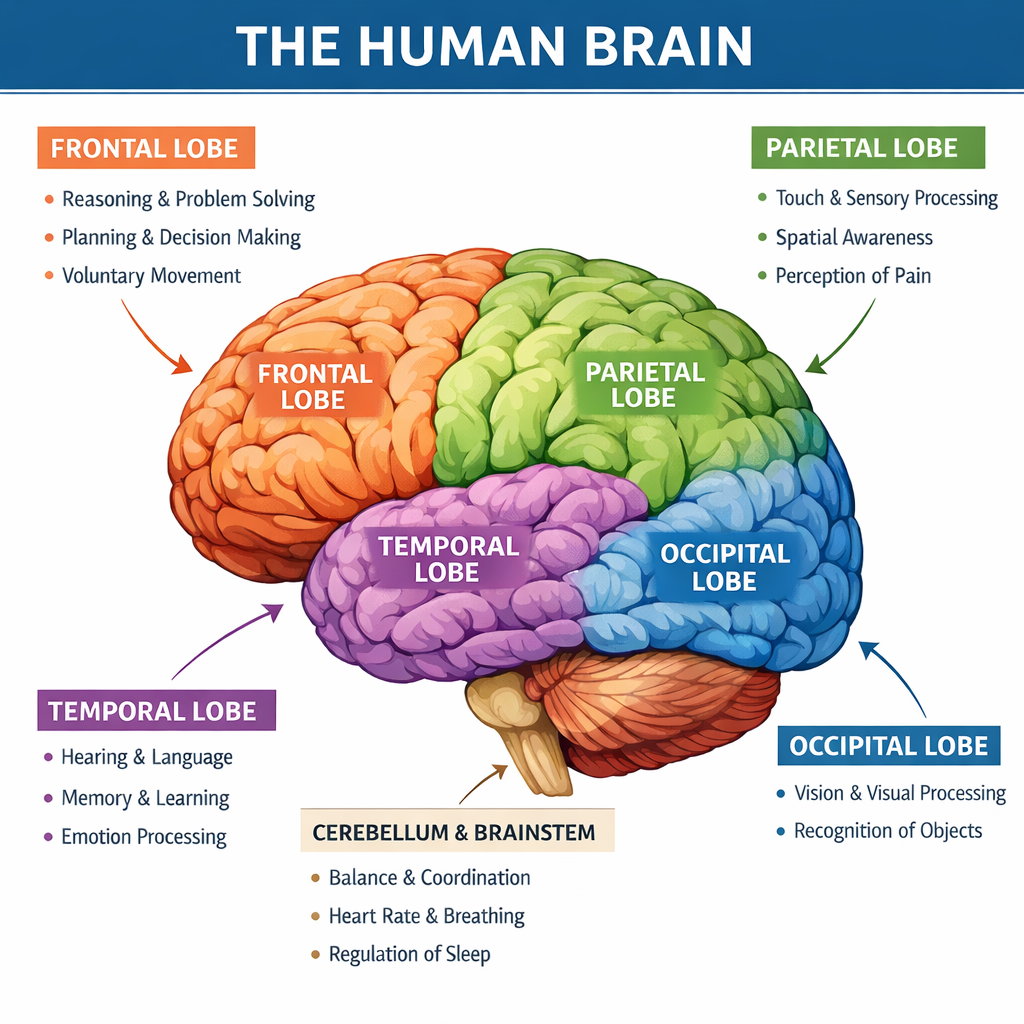
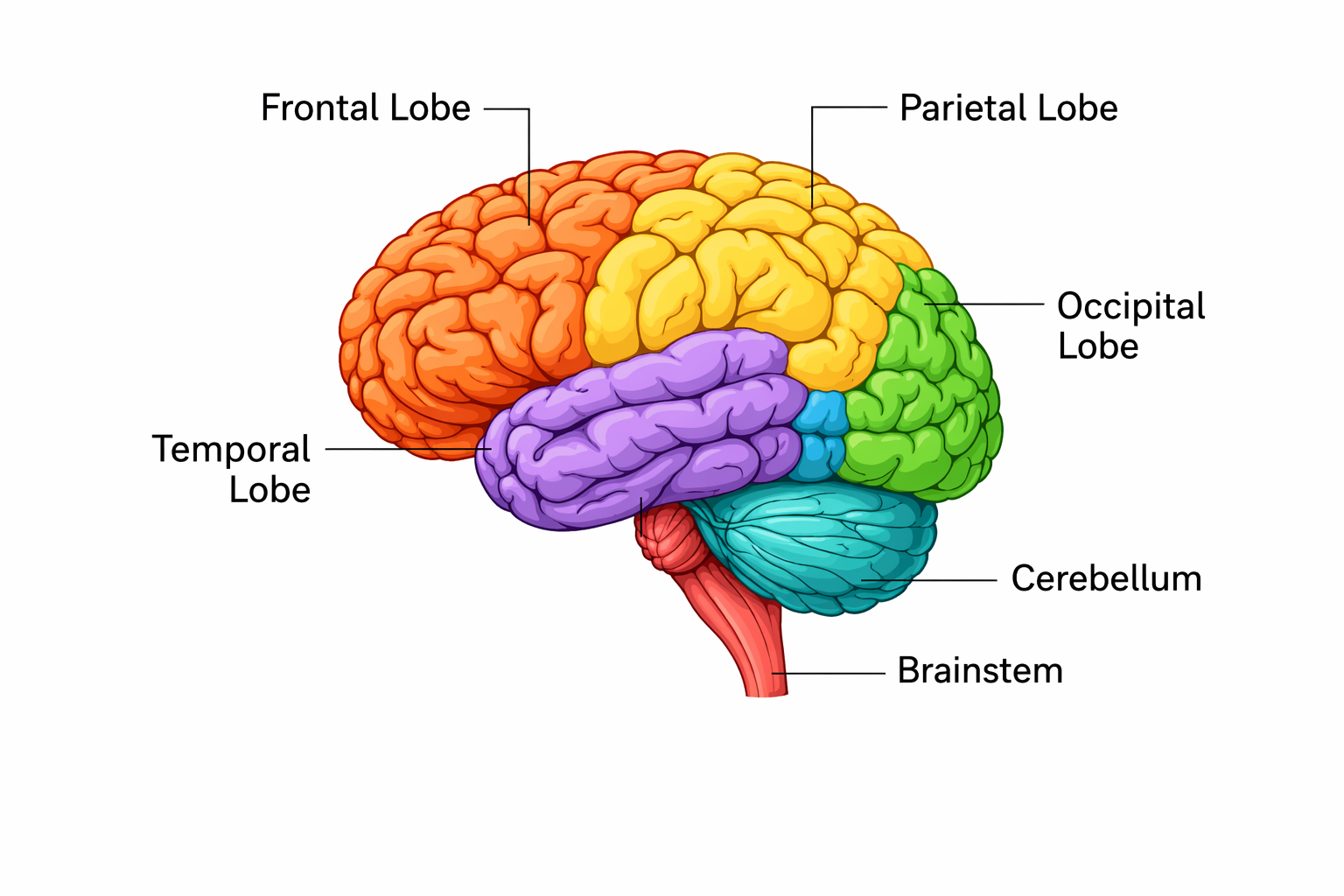
The brain is often described as three major regions working together as a single control system. The cerebrum handles conscious thought, sensory interpretation, language, planning, and voluntary movement. The cerebellum fine-tunes movement, timing, balance, and motor learning. The brainstem links the brain and spinal cord while regulating life-sustaining functions such as breathing, heart rate, blood pressure, and sleep-wake cycles.
- The cerebrum is the largest and most recognizable region, and its highly folded outer cortex increases surface area for complex processing.
- The cerebellum is especially important for precision and coordination, helping movements become smoother, faster, and more accurate with practice.
- The brainstem acts as a survival hub, managing many processes that continue automatically even when you are not consciously thinking about them.
The Four Lobes
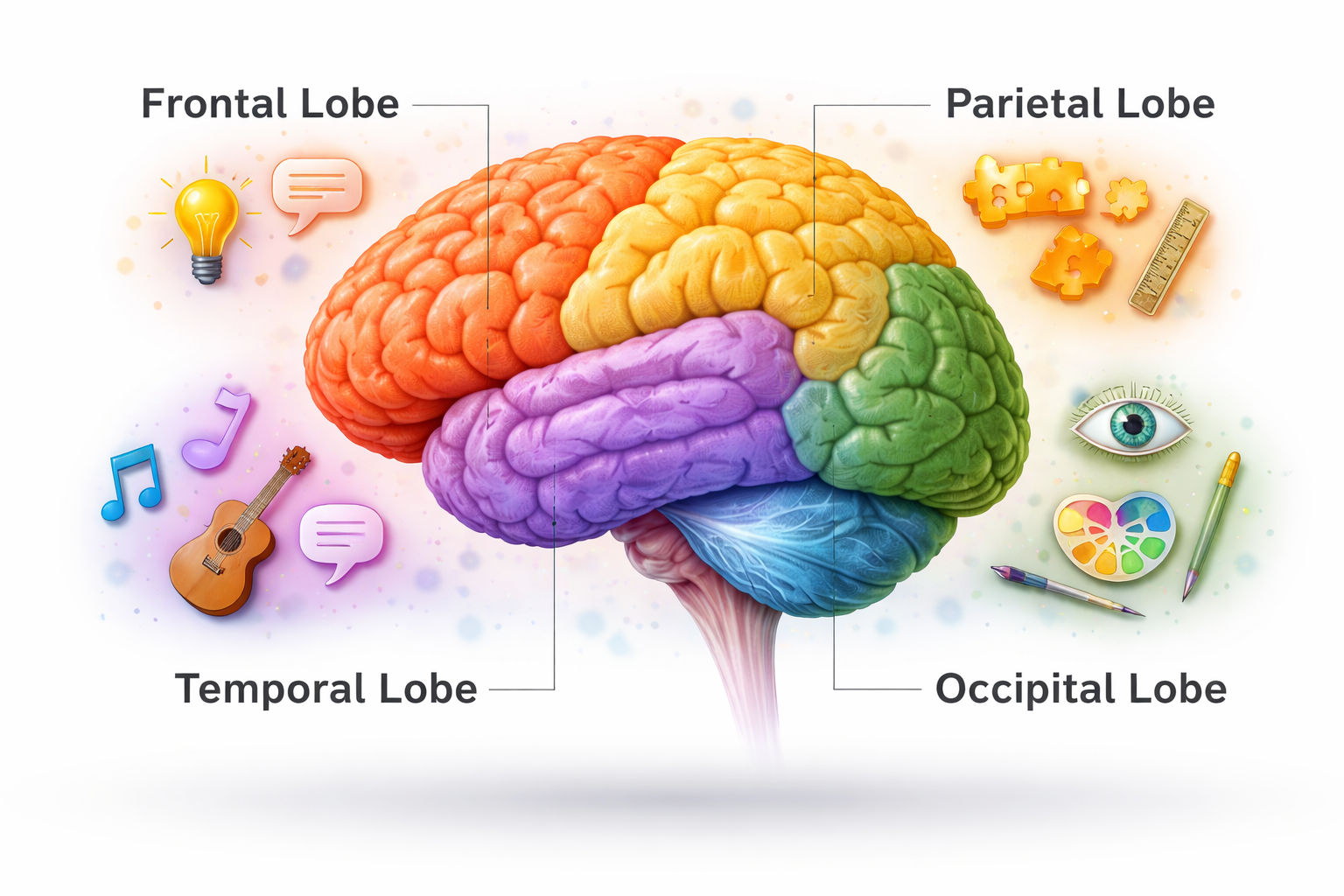
Each hemisphere of the cerebrum is divided into four lobes, and each lobe specializes in a different set of tasks. The frontal lobe supports planning, judgment, impulse control, speech production, and voluntary movement. The parietal lobe processes touch, body position, and spatial awareness. The occipital lobe is devoted largely to visual processing. The temporal lobe helps with hearing, language comprehension, memory, and emotional associations.
- Although the lobes have specialized roles, most real-world behaviors such as reading, driving, or having a conversation require several lobes to work together.
- The frontal lobe is strongly associated with executive function, which includes organizing behavior, weighing consequences, and focusing attention.
- The temporal and occipital lobes work closely when the brain links what you see with stored meaning, such as recognizing a face or reading a word.
Deep Brain Structures
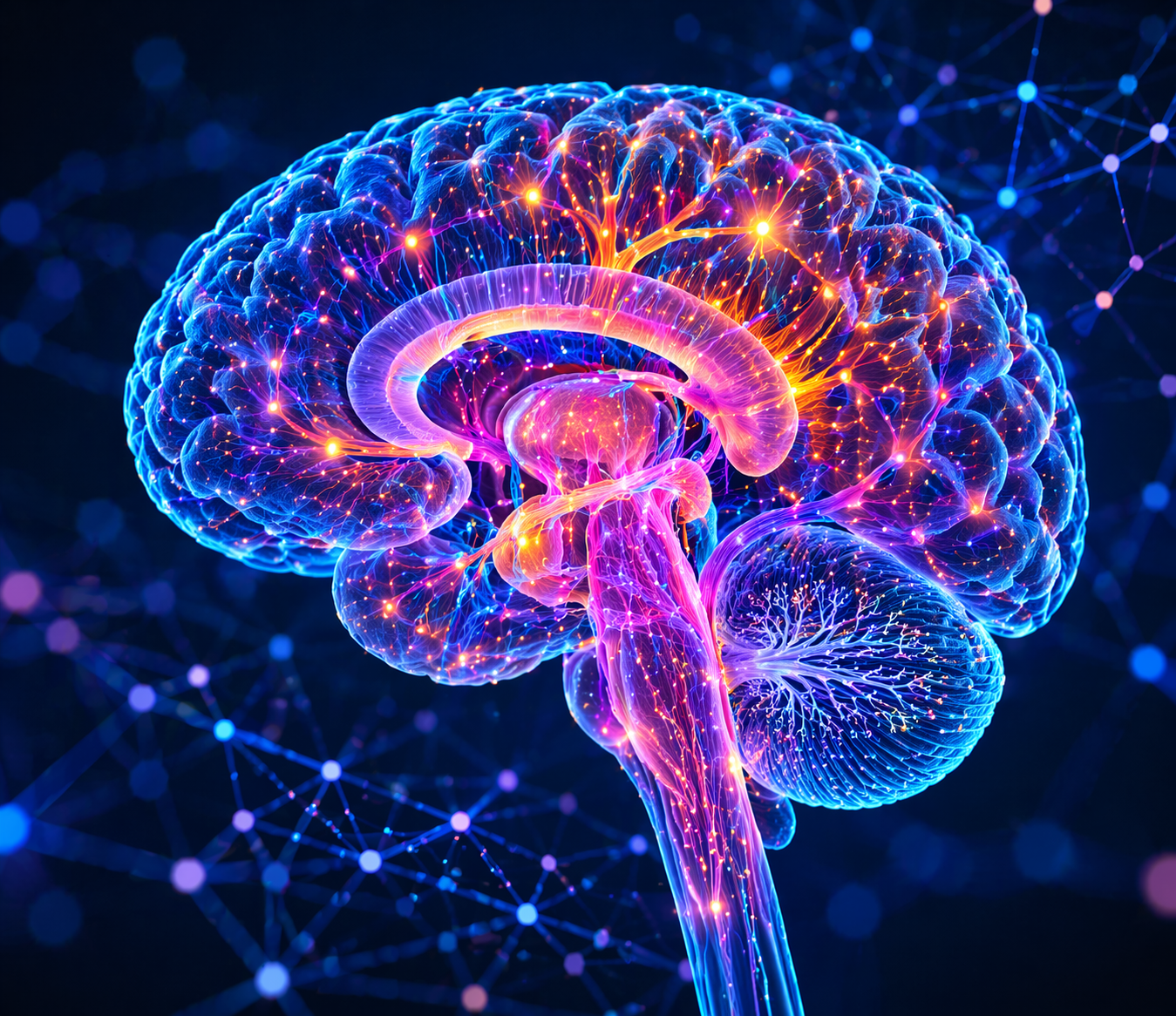
Below the cortex are deep structures that shape memory, emotion, motivation, movement, and homeostasis. The hippocampus is central to forming new memories and building spatial maps. The amygdala helps detect emotionally significant events, especially threats. The thalamus routes most incoming sensory information to the cortex, while the hypothalamus helps regulate hunger, temperature, stress responses, and hormones. The basal ganglia support movement selection, habit formation, and reward-based learning.
- These regions are deeply interconnected, which is why memory, emotion, and bodily states often influence one another.
- The hypothalamus connects the nervous system to the endocrine system, giving the brain a direct role in hormone-driven body regulation.
- The basal ganglia do not simply 'start movement'; they help decide which actions are reinforced, suppressed, or repeated over time.
Tissue Types: Grey vs. White Matter
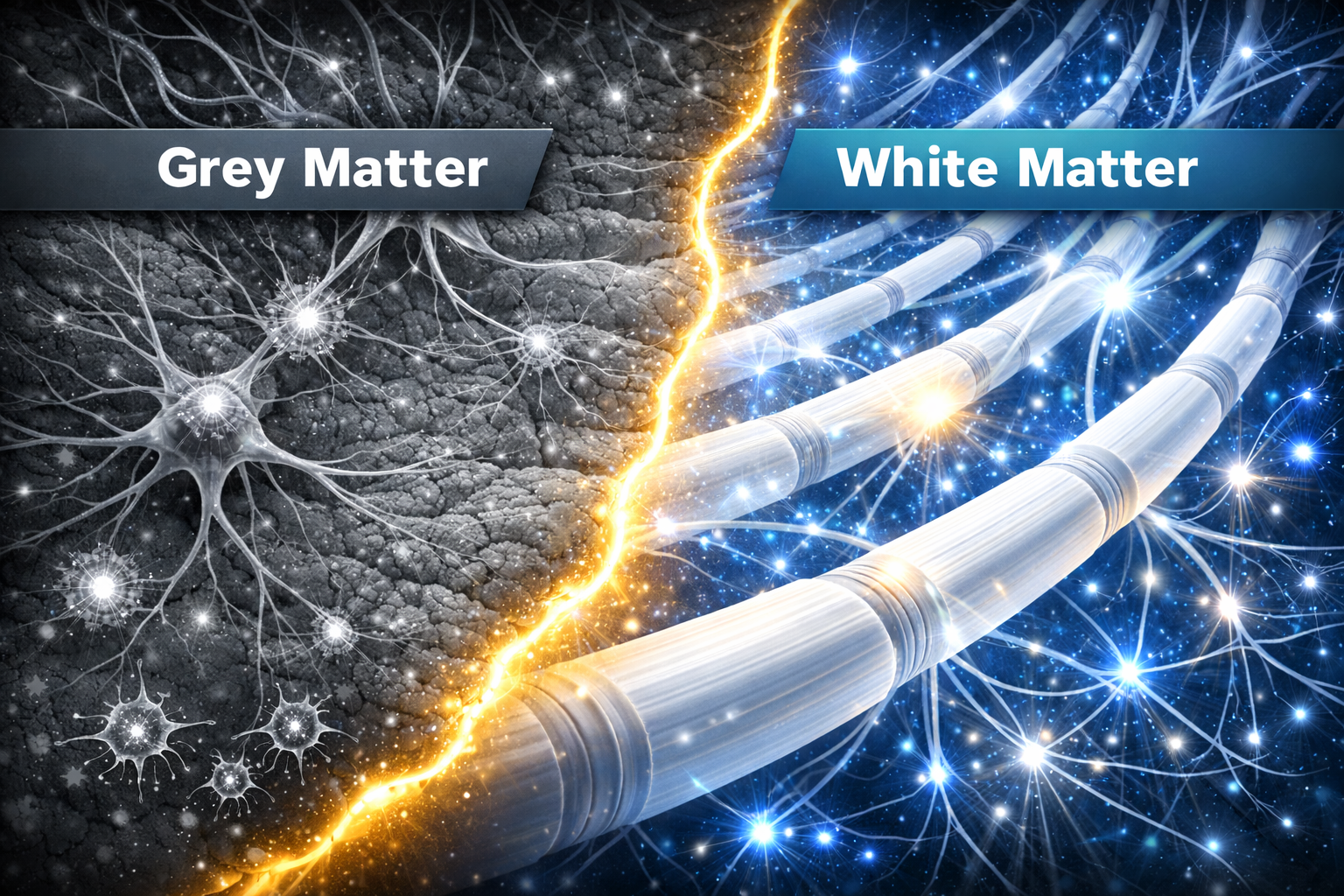
Grey matter and white matter are two complementary tissue types that make large-scale brain function possible. Grey matter contains many neuronal cell bodies, dendrites, and synapses, so it is strongly associated with information processing. White matter consists mainly of myelinated axons, the long fibers that connect distant regions and allow signals to travel efficiently through neural networks.
- You can think of grey matter as the brain's local processing hubs and white matter as the long-range wiring that lets those hubs communicate.
- Myelin acts as insulation around axons, increasing the speed and reliability of neural signaling across the brain.
- Healthy cognition depends on both tissue types: strong local processing is not enough without efficient communication between regions.
Neurons: The Brain's Signaling Cells
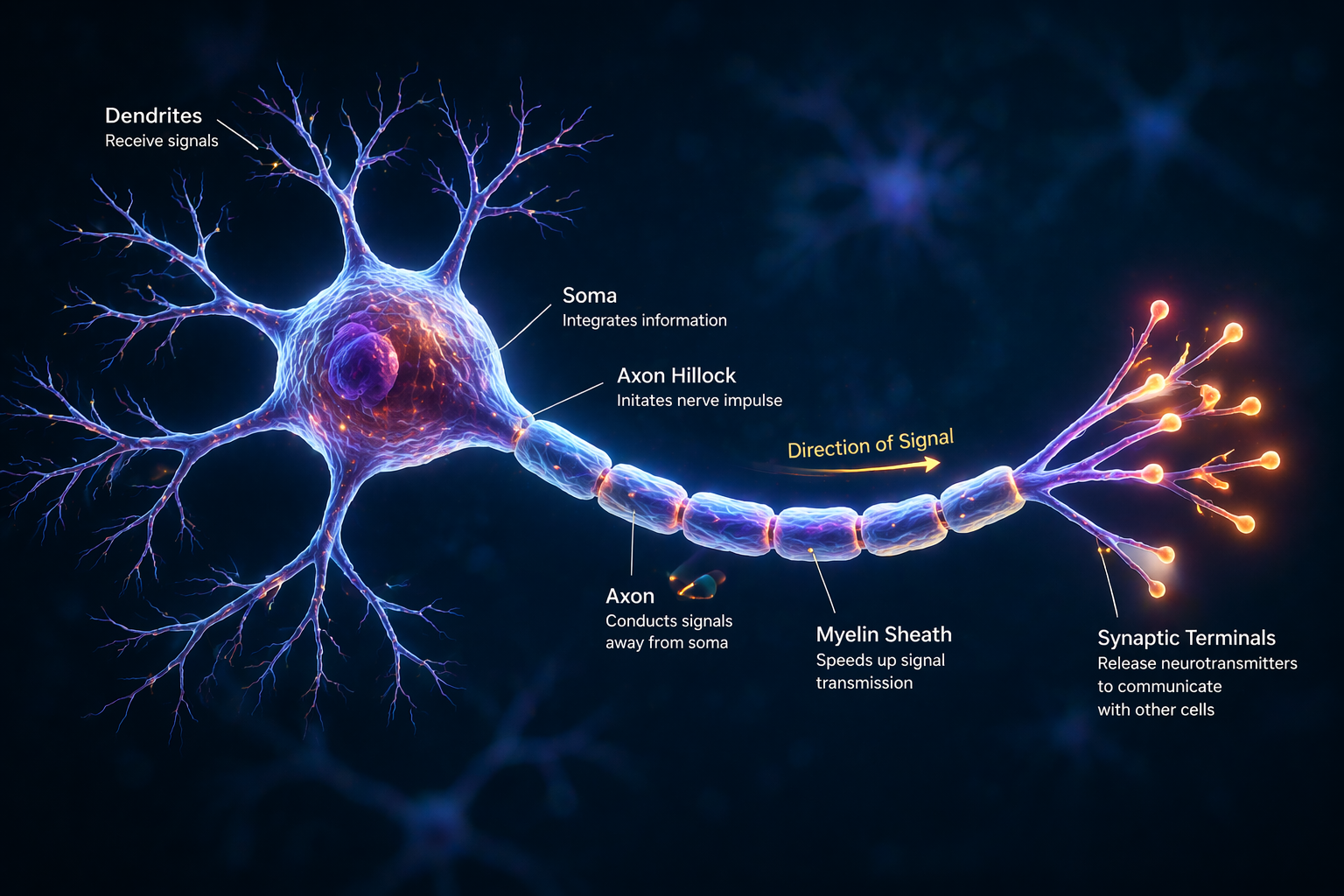
Neurons are the specialized cells that make rapid communication in the brain possible. Each neuron is built to receive input, integrate information, and send output to other cells. Dendrites collect incoming signals, the cell body helps process them, and the axon carries action potentials to synapses, where chemical messengers influence neighboring neurons. Although neurons are often discussed individually, their real power comes from forming vast interconnected circuits.
- Different neuron types serve different roles, including sensory neurons, motor neurons, and interneurons that connect and refine communication within neural networks.
- A single neuron may form thousands of synaptic connections, allowing even small local circuits to process complex patterns of information.
- Neurons do not work alone: glial cells support them metabolically, protect the environment around them, and help maintain efficient signaling across the brain.
Brain Plasticity & Adaptation
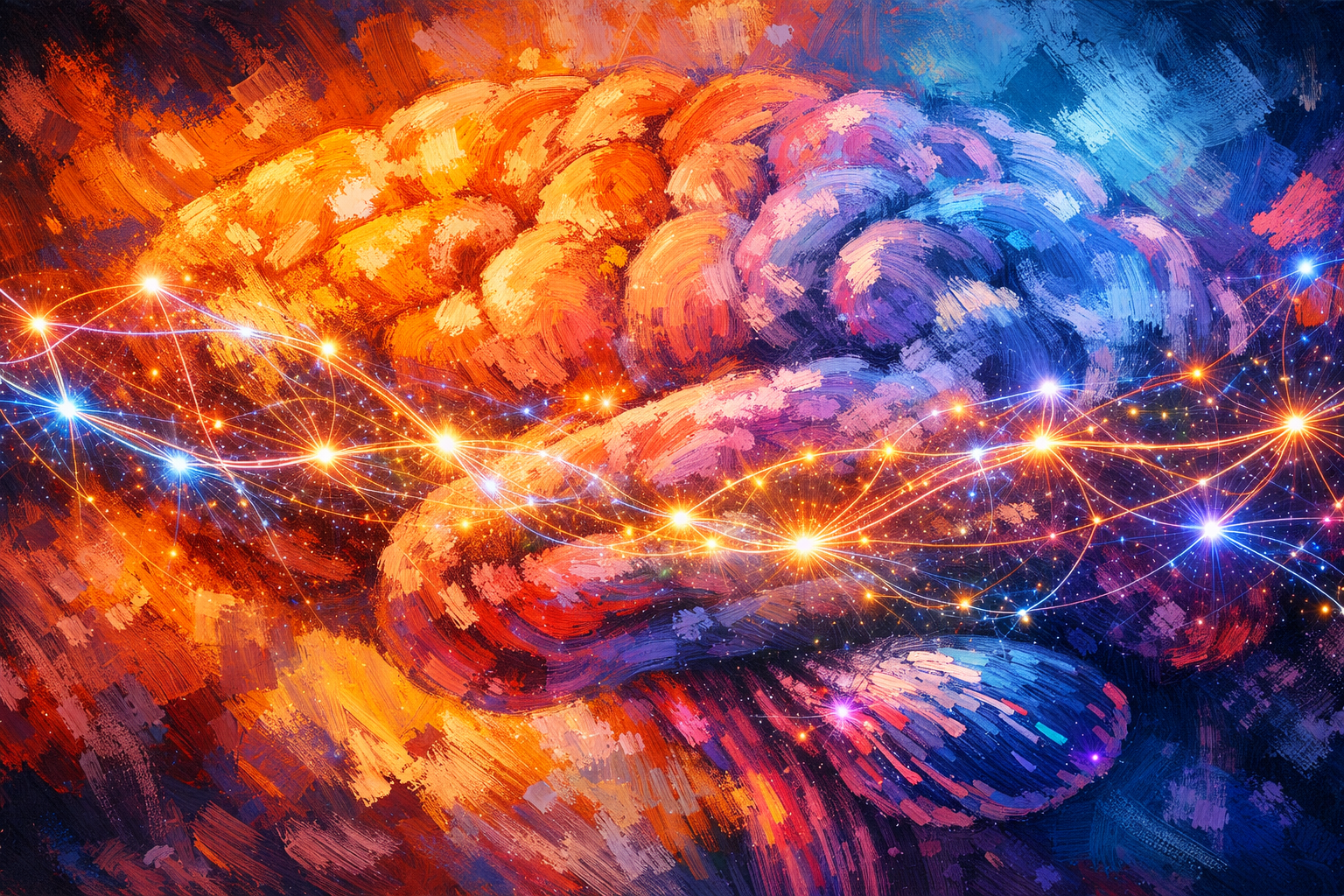
Neuroplasticity is the brain's ability to change its structure and function in response to experience, practice, injury, and environment. Learning a new skill, strengthening a memory, adapting after sensory loss, or recovering after some types of brain injury all depend on plasticity. Rather than being fixed after childhood, the brain remains dynamic across the lifespan, though the degree and speed of change can vary with age and context.
- Plasticity can involve strengthening existing synapses, weakening unused connections, or reorganizing networks so other regions help take over a task.
- Repeated experience matters because the brain tends to preserve circuits that are used often and prune connections that are rarely activated.
- Plasticity is one reason rehabilitation, deliberate practice, and enriched environments can improve function over time.
Hemispheres and Specialization
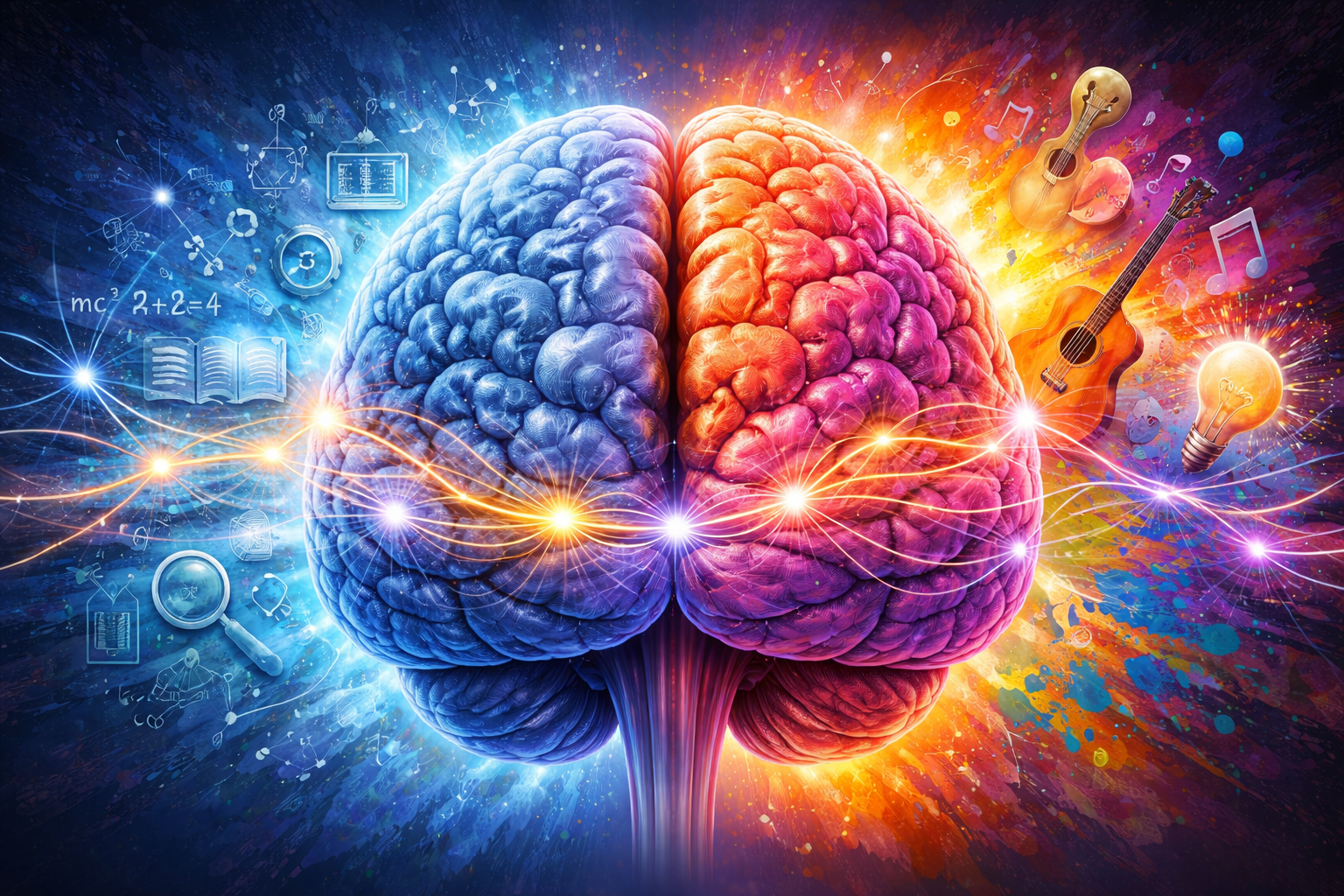
The two cerebral hemispheres are structurally similar, but they are not perfectly identical in function. In many people, language production and comprehension are more strongly left-lateralized, while some aspects of spatial processing, facial recognition, and attentional control rely more heavily on the right hemisphere.
This does not mean the brain is split into a “logical half” and a “creative half.” Most complex behavior depends on both hemispheres communicating through white matter tracts such as the corpus callosum, which allows distributed processing to become coordinated thought and action.
From Regions to Networks
Modern neuroscience increasingly describes the brain as a set of interacting networks rather than a simple collection of isolated modules. A single task such as reading a sentence, reaching for a cup, or recalling a memory recruits sensory systems, association cortex, motor planning regions, and deeper memory or salience circuits.
- Sensory networks gather information from the body and environment.
- Association areas compare input with stored knowledge, expectations, and goals.
- Motor and autonomic systems convert decisions into movement and physiological response.
This network view helps explain why injury to one area can have wide effects, and why the brain can sometimes reorganize function after damage by recruiting nearby or related circuits.
Primary Functional Systems
| System | Primary Regions Involved | Description |
|---|---|---|
| Cognition & Decision | Prefrontal Cortex | Executive function, planning, problem-solving, and personality expression. |
| Emotion | Amygdala, Limbic System | Emotional regulation, threat detection, and response conditioning. |
| Memory | Hippocampus | Encoding, storage, and retrieval of explicit and implicit memories. |
| Movement | Motor Cortex, Cerebellum, Basal Ganglia | Coordination, planning, and execution of voluntary motor functions. |
| Perception | Sensory Cortices (Occipital, Parietal, Temporal) | Processing of visual, auditory, tactile, and olfactory stimuli. |
Resources Used
These references support the educational summaries on this page and are included so readers can continue into primary or institutionally reviewed material.
Brain Basics: Know Your Brain
Used for accessible explanations of major brain regions, lobes, and inner brain structures.
A multi-modal parcellation of human cerebral cortex
Supports the discussion of cortical organization and modern brain mapping.
What are the parts of the nervous system?
Used to connect brain structure to broader nervous system function and communication.